
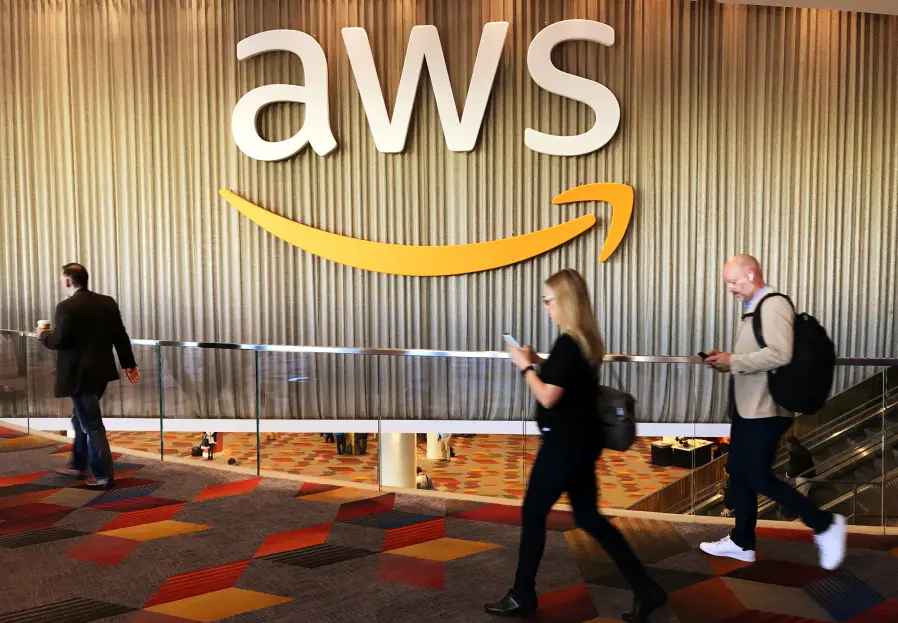
For millions of people trying to stream, trade, or check in for flights early Monday, the internet seemed to stall. Amazon Web Services (AWS), the backbone of much of the modern web, suffered a major outage that knocked offline some of the world’s biggest platforms — from Disney+ and Reddit to Coinbase and the McDonald’s app.
AWS, which runs the cloud infrastructure for countless businesses and governments, reported what it called an “operational issue” affecting “multiple services.” By 2:01 a.m. PDT, the company said it was “working on multiple parallel paths to accelerate recovery,” adding that more than 70 of its own services were hit.
“User reports indicate issues at Amazon Web Services (AWS) in the US-East-1 region. These problems are impacting multiple services that depend on AWS infrastructure. We’re monitoring the situation,” DownDetector reported.
The outage rippled across the internet. Downdetector showed surges in user complaints from Amazon, Lyft, Venmo, United Airlines, T-Mobile, and even the New York Times. British government websites Gov.uk and HM Revenue and Customs were affected too. A government spokesperson said officials were “in contact with the company, who are working to restore services as quickly as possible.”
Lloyds Banking Group confirmed disruptions across some of its systems and urged customers “to bear with us” as it worked to bring services back online. Twenty minutes later, the bank said operations were being restored.
By 3:35 a.m. PDT, AWS said the issue had been “fully mitigated,” with most operations returning to normal. The company warned that “some requests may be throttled while we work toward full resolution,” as systems continued clearing a backlog.
The outage wasn’t limited to financial services and streaming platforms. Users on social media said they couldn’t access Roblox or Fortnite, while Coinbase reported that many traders were temporarily locked out. Canva, the graphic design platform, said it was “experiencing significantly increased error rates which are impacting functionality on Canva.” Even the AI search startup Perplexity confirmed disruptions tied to the same AWS issue.
This isn’t the first time a technical glitch has shaken global infrastructure. In July 2024, a faulty software upgrade from cybersecurity firm CrowdStrike caused Microsoft Windows systems to crash worldwide, grounding flights, halting hospital operations, and disrupting banks. The incident cost companies millions and revealed how fragile digital dependencies can be.
“There’s no sign that this AWS outage was caused by a cyber attack—it looks like a technical fault affecting one of Amazon’s main data centres,” Rob Jardin, chief digital officer at cybersecurity firm NymVPN, told CNBC. “These issues can happen when systems become overloaded or a key part of the network goes down, and because so many websites and apps rely on AWS, the impact spreads quickly.”
Jardin added that the lesson is clear: “This incident is a reminder that cybersecurity isn’t only about defending against threats—it’s also about resilience. Businesses should plan for technical failures as seriously as they do for cyber attacks, ensuring they have redundancy, backup systems, and multi-cloud strategies to keep services running when the unexpected happens.”
The outage may have lasted only a few hours, but its reach was enormous. It showed once again how much of the internet depends on a handful of infrastructure giants — and how quickly a technical slip can turn into a digital blackout.