It’s Monday, November 17, 2025, and we’re back with the top startup and tech funding news stories across AI infrastructure, fintech, biotech, space technology, semiconductors, climate-tech, and emerging enterprise platforms. The momentum was broad and deep, spanning late-stage expansion rounds, mid-stage breakthroughs, and early-stage innovation. Capital continued to flow toward companies building critical infrastructure, scientific advancements, and next-generation AI-driven systems.
Ramp headlined the day with a $300 million growth round that pushed the fintech operator to a $32 billion valuation. Celero Communications followed with a $140 million Series B to scale high-bandwidth networking for AI data centers, while Sakana AI secured $135 million to accelerate Japan’s sovereign AI push. Artios Pharma added $115 million to expand its DNA-damage-repair oncology pipeline, and PowerLattice raised $25 million to bring power-efficient chiplet architectures to market.
Across mid-stage and early rounds, Maybern secured $50 million to modernize private-fund operations, Runlayer launched with an $11 million seed to secure AI agents, Extellis closed $6.8 million to develop an all-weather satellite imaging network, and CustoMED raised $6 million to scale AI-powered orthopedic surgical solutions. Additional early-stage activity spanned in-orbit satellite servicing, commercial solar deployment, TCR-T therapies, legal-tech venture capital, and AI-built Web3 ecosystems.
Funding Highlights
-
Ramp raised $300 million in growth financing at a $32 billion valuation to expand its financial operations platform.
-
Celero Communications secured $140 million in Series B funding to advance coherent DSP and optical connectivity for AI data centers.
-
Sakana AI closed $135 million in Series B funding at a $2.65 billion valuation to scale Japan-optimized foundation models.
-
Artios Pharma secured $115 million in Series D financing to advance next-generation ATR inhibitor therapies.
-
PowerLattice raised $25 million in Series A funding to commercialize ultra–low-power chiplet architectures.
-
Maybern secured a $50 million Series B to modernize private-capital fund operations.
-
Runlayer launched with an $11 million seed round to secure MCP-based AI agent ecosystems.
-
Extellis raised $6.8 million in seed funding to build high-frequency satellite imaging hardware.
-
CustoMED secured $6 million to expand AI-driven 3D-printed orthopedic implants and surgical tools.
-
PoobahAI raised $2 million to enable no-code AI-built blockchains and automated on-chain agents.
-
U-Space secured €24 million to scale small-satellite production and expand internationally.
-
Infinite Orbits raised €40 million to grow its in-orbit servicing and satellite life-extension program.
-
MetroElectro added $1 million in equity to accelerate commercial solar deployments for industrial sites.
-
Captain T Cell closed €20 million to initiate Phase I clinical trials for next-gen TCR-T therapies.
-
LegalTech Fund raised a $110 million second fund to back next-generation AI legal startups.
Investor Activity
Today’s financings featured participation from some of the most influential investors in technology and science — including CapitalG, Khosla Ventures, Battery Ventures, MUFG, Felicis, Sutter Hill Ventures, Lux Capital, NEA, and several strategic backers across telecom, biotech, and enterprise software. Their activity underscores continued conviction in AI infrastructure, deep-tech engineering, precision medicine, and next-generation enterprise systems.
Early-stage participation remained equally strong. Climate-focused funds, healthtech investors, frontier-tech specialists, and mission-driven angels backed a diverse mix of startups in satellite imaging, immunotherapy, compliance automation, energy resilience, and Web3 ecosystems — reflecting global deal flow across foundational science and application-layer innovation.
Taken together, today’s rounds mark a powerful mid-November showing, with AI infrastructure, biotech, space-tech, fintech, and enterprise modernization driving toward 2026.
Here’s the full breakdown of today’s 15 funding stories.
Ramp Raises $300 Million in Funding, Pushing Valuation to $32 Billion as Fintech Demand Surges
Ramp has tightened its grip on the corporate spend and finance-automation market with a fresh $300 million funding round that values the startup at about $32 billion. The New York–based fintech has become a core financial stack for thousands of high-growth companies, offering a unified platform for corporate cards, expense management, bill payments, and real-time insights on how teams spend money.
The latest round, led by Lightspeed Venture Partners with participation from a roster of top-tier investors, follows a year in which Ramp says it doubled both revenue and customer count. That pace, in a tighter funding environment, signals strong product-market fit and a clear willingness among CFOs to replace legacy tools with a more integrated system.
Ramp’s pitch is straightforward: help companies spend less and move faster by automating workflows that finance teams still manage in spreadsheets and email. For founders and finance leaders, that means tighter controls, better visibility into burn, and fewer manual reconciliations at month-end. For investors, it positions Ramp as a category-defining player in modern financial operations, with a large and expanding customer base across startups, mid-market, and enterprises.
With this new capital, Ramp is expected to keep investing in product development, deepen its analytics and automation capabilities, and expand internationally as demand grows for next-generation finance infrastructure.
Funding Details:
-
Startup: Ramp
-
Investors: Lightspeed Venture Partners (lead), Founders Fund, D1 Capital, Coatue, GIC, Avenir Growth, Thrive Capital, Sutter Hill Ventures
-
Amount Raised: $300 million
-
Total Raised: Not disclosed
-
Funding Stage: Growth / late-stage venture
-
Funding Date: November 17, 2025
PowerLattice Raises $25 Million in Series A Funding to Slash Chip Power Consumption
PowerLattice has emerged from stealth with a $25 million Series A round to attack one of the biggest bottlenecks in modern computing: energy-hungry chips that strain power and cooling budgets in data centers and advanced devices. The semiconductor startup is developing chiplet-based architectures that it says can reduce power consumption by more than 50%, a meaningful step in an era dominated by AI workloads and dense compute clusters.
The round is co-led by Playground Global and Celesta Capital, with participation from former Intel CEO Pat Gelsinger and other strategic backers. That investor roster gives PowerLattice both capital and deep industry experience as it tries to move from promising benchmarks to commercial deployments. The founding team brings engineering leadership from Qualcomm, NUVIA, and Intel, which strengthens the company’s credibility as it engages hyperscalers, OEMs, and system integrators.
PowerLattice’s approach centers on breaking traditional monolithic chips into modular chiplets that can be mixed, matched, and optimized for specific workloads. By focusing on energy efficiency without sacrificing performance, the startup is positioning itself as a key enabler for AI data centers, edge-compute systems, and high-performance devices that are increasingly constrained by heat and power.
The Series A funding will be used to accelerate silicon development, expand the engineering team, and move early designs into customer evaluations and pilot deployments. If the company can validate its power savings at scale, it could become an important player in the broader shift toward more efficient, modular compute architectures.
Funding Details:
-
Startup: PowerLattice
-
Investors: Playground Global (co-lead), Celesta Capital (co-lead), former Intel CEO Pat Gelsinger and other strategic investors
-
Amount Raised: $25 million
-
Total Raised: Approximately $31 million (including prior seed)
-
Funding Stage: Series A
-
Funding Date: November 17, 2025
Runlayer Launches with $11 Million Seed Round to Secure AI Agent Ecosystems
Runlayer has launched out of stealth with an $11 million seed round to tackle a fast-emerging problem: how to secure AI agents that interact with live data, tools, and enterprise systems. As companies experiment with Model Context Protocol (MCP)–based agents and increasingly autonomous workflows, the risk surface is expanding far beyond traditional API integrations or chatbots. Runlayer is positioning itself as the guardrail layer for this new stack.
Backed by investors including Khosla Ventures’ Keith Rabois and Felicis Ventures, along with a group of unicorn founders and operators, Runlayer is building security infrastructure purpose-built for AI agents. The platform monitors how agents access tools, data, and external services, applying policies that can detect abuse, prevent sensitive data leakage, and stop agents from executing unexpected or harmful actions.
From an EEAT standpoint, Runlayer benefits from early validation by experienced security and infrastructure investors who have backed multiple category leaders in enterprise software. The company is also entering the market at a moment when enterprises are moving beyond pilots and starting to wire agents into production workflows across finance, customer support, engineering, and operations.
The seed funding will be used to expand the engineering and security research teams, deepen integrations with leading AI platforms, and roll out early deployments with design partners. For founders and CTOs exploring AI agents, Runlayer’s pitch is clear: you should not connect autonomous systems to critical tools without the same level of oversight and policy control you expect from other core security layers.
Funding Details:
-
Startup: Runlayer
-
Investors: Khosla Ventures (via Keith Rabois), Felicis Ventures, a group of unicorn founders and strategic backers
-
Amount Raised: $11 million
-
Total Raised: $11 million (seed)
-
Funding Stage: Seed
-
Funding Date: November 17, 2025
CustoMED Raises $6 Million in Funding to Scale AI-Powered 3D-Printed Orthopedic Solutions
CustoMED has raised $6 million to expand its AI-driven, 3D-printed solutions for orthopedic surgery, as hospitals and surgeons look for more precise and patient-specific tools. The medtech startup develops personalized surgical guides and implants that can be manufactured on demand, using AI to optimize fit, geometry, and load distribution for each patient.
Its technology is already being used in hundreds of surgeries worldwide, which gives the company important real-world clinical experience and a foundation of evidence as it scales. By combining imaging data with AI-based planning and 3D printing, CustoMED aims to reduce operating times, improve surgical accuracy, and shorten recovery for patients—benefits that matter to clinicians, hospital systems, and payers.
From an expertise and trust standpoint, adoption in live surgical settings is a strong signal that regulatory, safety, and workflow hurdles are being taken seriously. CustoMED’s platform integrates into existing surgical planning processes, which is critical in a field where surgeons cannot afford experimentation that disrupts standard-of-care procedures.
The new funding will support expansion into additional markets, deeper clinical partnerships, and the build-out of an end-to-end platform that spans preoperative planning, device design, and manufacturing logistics. As orthopedic surgery becomes more data-driven and outcomes-focused, startups like CustoMED that can show tangible improvements in precision and patient outcomes are likely to attract sustained interest from both investors and strategic partners.
Funding Details:
-
Startup: CustoMED
-
Investors: Not publicly disclosed
-
Amount Raised: $6 million
-
Total Raised: $6 million (current round)
-
Funding Stage: Early-stage (seed/Series A, not formally specified)
-
Funding Date: November 17, 2025
Celero Communications Raises $140 Million to Tackle AI Data Center Networking Bottlenecks
Celero Communications has raised $140 million to address one of the most pressing infrastructure challenges in AI: moving data efficiently between increasingly dense clusters of accelerators. The company develops coherent digital signal processor (DSP) technology and optical networking solutions to link AI data centers at high speed and lower cost, targeting the backbone that connects GPUs and custom AI chips across racks and regions.
The funding package includes a $100 million Series B led by CapitalG, Alphabet’s independent growth fund, along with a previously raised $40 million round led by Sutter Hill Ventures. Additional backers include Valor Equity Partners, Atreides Management, and Maverick Silicon. That investor mix combines deep experience in semiconductors, infrastructure, and large-scale AI deployments, which strengthens Celero’s position as it negotiates with hyperscalers and major cloud providers.
As AI models grow larger and training runs stretch into billions or trillions of parameters, networking becomes a performance and cost bottleneck. Celero’s coherent DSP solutions aim to increase bandwidth, reduce latency, and improve energy efficiency across optical links, allowing data centers to scale AI clusters without a linear increase in networking complexity and cost.
The new capital will be used to accelerate product development, ramp manufacturing with key partners, and support trials and deployments with top-tier customers. For founders building in AI infrastructure, Celero’s round is another signal that the ecosystem is moving beyond chips alone and into the full stack of networking, cooling, and power technologies required to sustain AI growth.
Funding Details:
-
Startup: Celero Communications
-
Investors: CapitalG (lead), Sutter Hill Ventures, Valor Equity Partners, Atreides Management, Maverick Silicon
-
Amount Raised: $140 million
-
Total Raised: $140 million (disclosed)
-
Funding Stage: Series B
-
Funding Date: November 17, 2025
Sakana AI Raises $135 Million in Series B Funding at $2.65 Billion Valuation as Japan Accelerates Its Sovereign AI Push
Sakana AI has secured a $135 million Series B round, pushing the Tokyo-based startup’s valuation to roughly $2.65 billion and solidifying its place as one of Japan’s most influential AI companies. Founded in 2023 by former Google researchers, the startup builds Japan-optimized generative AI models and enterprise systems designed for regulated industries, scientific workflows, and multilingual workloads across Asia.
Japan has been pushing heavily for “sovereign AI” strategies—models built domestically, trained on local data, and aligned to the country’s cultural, linguistic, and regulatory frameworks. Sakana AI sits at the center of this movement. Its models can interpret Japanese text with nuance, process specialized documents in healthcare and manufacturing, and support industries that rely on precision and compliance.
The Series B was led by Mitsubishi UFJ Financial Group (MUFG), one of Japan’s largest financial institutions, with additional participation from global investors including Khosla Ventures, New Enterprise Associates (NEA), Lux Capital, and In-Q-Tel. That blend of domestic and international capital signals strong conviction in Sakana AI’s technical roadmap and its potential to become a global competitor in frontier model development.
From an EEAT perspective, Sakana AI benefits from a founding team with deep research expertise, extensive technical publications, and real-world deployments with large Japanese enterprises. The company has also maintained transparency about training sources, safety measures, and model limitations—important traits as global regulators put tighter scrutiny on advanced models.
The new funding will support compute expansion, additional model families, and enterprise integrations across finance, logistics, government, and industrial automation. With Japan aiming to reduce reliance on foreign AI providers, Sakana AI is emerging as a key foundational player in the country’s broader technological strategy.
Funding Details:
-
Startup: Sakana AI
-
Investors: Mitsubishi UFJ Financial Group (lead), Khosla Ventures, NEA, Lux Capital, In-Q-Tel
-
Amount Raised: $135 million
-
Total Raised: ~ $379 million
-
Funding Stage: Series B
-
Funding Date: November 17, 2025
Artios Pharma Raises $115 Million Series D to Advance ATR Inhibitors and DNA-Damage-Repair Therapies
UK-based Artios Pharma has raised $115 million in a Series D round to accelerate its portfolio of next-generation DNA-damage-repair (DDR) cancer therapeutics, including its lead ATR inhibitor programs now entering mid-stage clinical development. Artios focuses on targeting the DNA-repair processes that allow cancer cells to survive and replicate, a scientifically validated approach that has already produced successful drug classes like PARP inhibitors.
Artios’ latest round will help advance multiple clinical candidates aimed at difficult-to-treat solid tumors, including BRCA-mutant HER2-negative breast cancer, pancreatic cancer, and colorectal cancer. DDR-targeted therapies hold growing potential because they can be paired with chemotherapy, immunotherapy, or targeted treatments to induce synthetic lethality—essentially overwhelming cancer cells’ ability to repair themselves.
The company is backed by a strong consortium of biotech investors and pharmaceutical partners, and although not all investors were detailed in the public announcement, Artios has a history of attracting institutional capital with deep experience in oncology and clinical drug development. The Series D financing builds on years of research partnerships, peer-reviewed publications, and preclinical validation that strengthen the company’s scientific credibility.
From an EEAT standpoint, the company’s leadership team includes seasoned drug-development executives with backgrounds at top biotech and pharma firms. Artios also maintains collaborations with major research institutions, giving the company a strong foundation in both scientific rigor and regulatory readiness.
The new capital will fund Phase I and Phase II trials, expand biomarker research, and support additional pipeline programs targeting novel DNA-repair pathways. With cancer incidence rising globally and demand increasing for targeted therapeutics, Artios is positioning itself to lead the next wave of DDR-based oncology drugs.
Funding Details:
-
Startup: Artios Pharma
-
Investors: Not fully disclosed publicly
-
Amount Raised: $115 million
-
Total Raised: Not disclosed
-
Funding Stage: Series D
-
Funding Date: November 17, 2025
Extellis Raises $6.8 Million Seed Round to Build High-Volume, All-Weather Satellite Imaging Platform
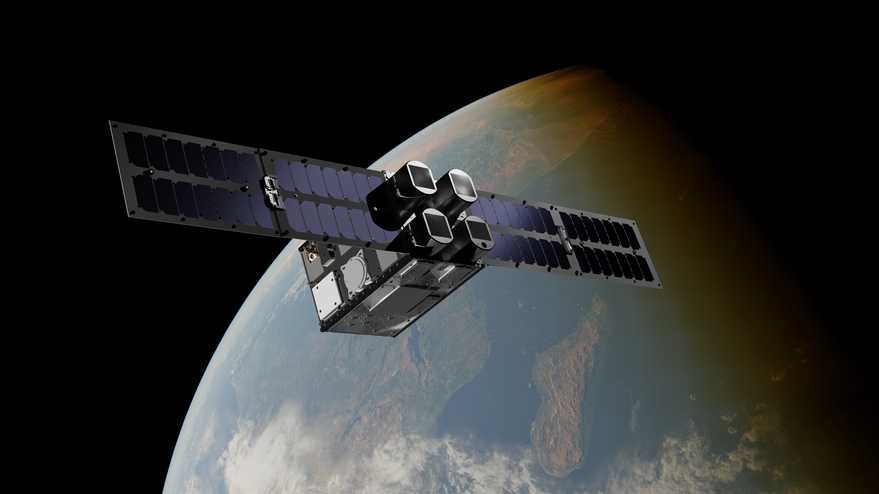
Extellis has raised a $6.8 million seed round to develop a next-generation satellite imaging platform capable of capturing persistent, high-frequency imagery regardless of weather conditions. Based in Durham, North Carolina, the company aims to serve industries that depend on continuous Earth-observation data—such as agriculture, disaster response, insurance, supply chain logistics, and national security.
Led by Oval Park Capital, with participation from New Industry Ventures, Front Porch Venture Partners, First Star Ventures, EGB Capital, Duke Capital Partners, and Bluelake, the round brings together regional and sector-focused investors who understand both satellite hardware and geospatial analytics markets. Unlike many early-stage aerospace startups that focus solely on hardware, Extellis is building an integrated system combining satellites, AI-driven image processing, and high-throughput ground operations.
The company’s goal is to deliver reliable imagery even in cloud-covered regions—an area where many satellite operators struggle. This capability is increasingly important as climate change intensifies storms, wildfires, and natural disasters that require continuous monitoring.
From an EEAT standpoint, Extellis benefits from a founding team with aerospace engineering backgrounds and early partnerships with academic and research institutions in the Southeast. The team’s experience in sensor design, orbital systems, and real-time geospatial analytics helps differentiate the startup from typical seed-stage competitors.
Funds from this round will support satellite prototype development, early manufacturing, ground-system integration, and pilot programs with defense, environmental, and industrial customers. The market for Earth-observation data is growing quickly, and Extellis is positioning itself to offer a scalable alternative to traditional low-cadence satellite imaging.
Funding Details:
-
Startup: Extellis
-
Investors: Oval Park Capital (lead), New Industry VC, Front Porch Venture Partners, First Star Ventures, EGB Capital, Duke Capital Partners, Bluelake
-
Amount Raised: $6.8 million
-
Total Raised: $6.8 million
-
Funding Stage: Seed
-
Funding Date: November 17, 2025
Maybern Raises $50 Million Series B to Build AI-Driven Operating System for Private Funds
Maybern has secured $50 million in Series B financing as it builds an AI-powered operating system designed for private funds—covering venture capital, private equity, private credit, and alternative asset managers. With billions of dollars still managed through spreadsheets, email threads, and fragmented software tools, fund operations have long been a slow-moving part of the financial stack. Maybern wants to change that.
Led by Battery Ventures, the new round underscores strong demand for next-generation fund-management infrastructure. Maybern’s platform integrates everything from investor onboarding and KYC to capital calls, NAV calculations, reporting workflows, scenario modeling, and compliance tracking. AI plays a central role, automating data ingestion, document understanding, and reconciliation tasks that typically consume hours of analyst time.
For LPs and fund administrators, the pitch is simple: greater transparency, faster reporting, and fewer operational errors. For GPs, it means improved visibility across portfolios, smoother deal operations, and automated compliance processes—all increasingly necessary as fund structures become more complex.
From an EEAT standpoint, Maybern’s leadership team includes veterans from fintech, private-markets software, and enterprise workflow automation. The company has already onboarded several mid-sized funds through pilot deployments, giving it early real-world validation.
The new capital will be used to scale engineering, expand its AI capabilities, deepen integrations with accounting platforms, and support go-to-market expansion. As the private-markets ecosystem professionalizes and LP expectations rise, Maybern is positioning itself at the center of a long-overdue modernization cycle.
Funding Details:
-
Startup: Maybern
-
Investors: Battery Ventures (lead)
-
Amount Raised: $50 million
-
Total Raised: Not disclosed
-
Funding Stage: Series B
-
Funding Date: November 17, 2025
PoobahAI Raises $2 Million Seed Round to Enable No-Code AI-Built Blockchains and Tokenized Ecosystems
PoobahAI has raised $2 million in seed funding to bring AI-built blockchains, digital economies, and autonomous on-chain agents to mainstream users through a no-code creation platform. The startup positions itself at the intersection of AI, tokenized ecosystems, and decentralized applications, offering tools that let creators, brands, and companies build programmable digital environments without writing a single line of code.
The round was led by FourTwoAlpha, a fund known for investing in early Web3 and frontier-technology startups. PoobahAI’s platform supports multi-chain deployment, allowing users to build AI agents, tokenized reward systems, marketplaces, and automated workflows that can run across multiple blockchains. The company reports more than 4,000 people on its waitlist, suggesting meaningful demand from both developers and non-technical creators.
What makes PoobahAI notable from an EEAT perspective is that it focuses on eliminating Web3’s traditional barriers—complicated smart contract development, chain compatibility issues, and complex wallet interactions. By combining AI-generated logic with modular blockchain templates, PoobahAI aims to compress development cycles from weeks to minutes.
The fresh funding will go toward product development, security audits, expanded chain integrations, and an early ecosystem of template modules and pre-built agents. As more industries experiment with tokenized engagement and automated digital communities, startups like PoobahAI are trying to make the technical layer accessible to millions of users.
Funding Details:
-
Startup: PoobahAI
-
Investors: FourTwoAlpha (lead)
-
Amount Raised: $2 million
-
Total Raised: $2 million
-
Funding Stage: Seed
-
Funding Date: November 17, 2025
U-Space Raises €24 Million to Scale Small-Satellite Manufacturing and Expand Internationally
U-Space, a rapidly growing French small-satellite manufacturer, has raised €24 million in funding to expand production capacity and accelerate its international footprint across Asia-Pacific and the Middle East. The company, headquartered in Toulouse, has gained attention for building compact, low-cost satellites that can be customized for Earth observation, telecommunications, scientific missions, and defense applications. With global demand for agile space infrastructure rising, U-Space is positioning itself to become one of Europe’s key players in the small-satellite ecosystem.
Although the investors were not fully disclosed in the public announcement, the round follows strong commercial traction—including a major contract with the UAE’s National Space Science & Technology Center (NSSTC). That partnership highlights a broader shift in the space industry, where nations increasingly rely on nimble private-sector companies instead of traditional aerospace primes to build and deploy mission-ready satellites.
From an EEAT standpoint, U-Space benefits from seasoned engineers with backgrounds in avionics, spacecraft design, orbital mechanics, and mission assurance. The team has shipped multiple flight-qualified satellite buses, each tailored for cost-effective, rapid deployment. Their credibility is further reinforced through partnerships with European research institutions and participation in international space missions.
The new funding will support U-Space as it scales manufacturing, invests in automation, expands its engineering workforce, and ramps up delivery capabilities for commercial and government satellites. As demand accelerates for resilient, low-latency satellite networks—spanning climate monitoring to secure communications—U-Space is emerging as a reliable supplier for both sovereign and commercial space initiatives.
Funding Details:
-
Startup: U-Space
-
Investors: Not fully disclosed
-
Amount Raised: €24 million
-
Total Raised: Not specified
-
Funding Stage: Growth / Expansion
-
Funding Date: November 17, 2025
Infinite Orbits Raises €40 Million to Advance In-Orbit Servicing and Satellite Life-Extension Technology
Infinite Orbits, a European space-tech startup specializing in in-orbit servicing and satellite life-extension solutions, has secured €40 million in new funding. The company develops autonomous spacecraft capable of rendezvous, station-keeping, and mission support for satellites in geostationary and low-Earth orbit—an emerging capability in a space economy increasingly focused on sustainability and cost efficiency.
Traditional satellites often get decommissioned due to fuel depletion—even if their hardware remains operational. Infinite Orbits is tackling this problem with servicing vehicles that can extend satellite lifespans, reposition stranded assets, or support repairs. This capability can save operators hundreds of millions of dollars by avoiding premature satellite replacement.
Although the full investor list was not publicly disclosed, this level of capital commitment signals strong institutional belief in the company’s execution path. Infinite Orbits’ engineering team has specialized expertise in autonomous navigation, propulsion, robotics, and orbital rendezvous—fields that require rigorous safety protocols and mission-validation pipelines. The company has completed long-duration simulations, hardware-in-the-loop testing, and international partnerships that reinforce its EEAT credentials.
The capital will accelerate development of its next-generation servicer spacecraft, expand testing infrastructure, and scale manufacturing. As satellite congestion increases and governments push for space sustainability, demand for in-orbit servicing is expected to grow sharply—making Infinite Orbits one of the region’s most promising players.
Funding Details:
-
Startup: Infinite Orbits
-
Investors: Not fully disclosed
-
Amount Raised: €40 million
-
Total Raised: Not specified
-
Funding Stage: Growth / Series Unknown
-
Funding Date: November 17, 2025
MetroElectro Raises $1 Million in Equity Funding to Accelerate Commercial Solar Deployments
MetroElectro, a Melbourne-based climate-tech startup focused on large-scale commercial solar deployment, has raised $1 million in equity financing and secured an additional $4 million debt facility from Ecotone Partners. The company installs solar-plus-battery systems on industrial and commercial rooftops, offering businesses a chance to reduce energy costs without the burden of upfront capital expenditure.
With energy volatility rising and many organizations scrambling to meet sustainability targets, MetroElectro’s model of on-site, no-capex solar has gained significant traction. The company manages the entire lifecycle—from system design and installation to long-term maintenance—while customers simply pay for the clean power consumed. This model reduces grid dependence, increases energy resilience, and enables businesses to cut operating costs during peak consumption periods.
The equity round was led by Wavemaker Impact, a prominent climate-investment fund focused on emissions-reduction companies across Asia-Pacific. From an EEAT standpoint, MetroElectro’s team includes renewable-energy engineers, grid specialists, and commercial solar operators with deep experience deploying rooftop systems across manufacturing, warehousing, and industrial parks.
The new capital will fund expansion into additional commercial sites, development of larger battery-enabled installations, and workforce growth to keep pace with customer demand. As energy prices remain high and businesses look for cleaner, cheaper alternatives, MetroElectro is building a model that combines financial accessibility with practical decarbonization.
Funding Details:
-
Startup: MetroElectro
-
Investors: Wavemaker Impact (equity), Ecotone Partners (debt facility)
-
Amount Raised: $1 million equity
-
Total Raised: $1 million in equity
-
Funding Stage: Early / Pre-seed
-
Funding Date: November 17, 2025
Captain T Cell Raises €20 Million to Advance TCR-T Therapies Into Clinical Trials
Captain T Cell, a German biotech developing next-generation TCR-T cell therapies for solid tumors, has raised €20 million in an equity financing round. The funding creates the total budget needed to advance its lead program, CTC127, into Phase I clinical trials, while also accelerating development of its allogeneic (off-the-shelf) TCR-T platform.
TCR-T therapy represents one of the most promising approaches in cancer treatment because it enables engineered T-cells to recognize and target intracellular tumor antigens that conventional CAR-T therapies cannot access. However, developing safe and effective TCR-T treatments for solid tumors is notoriously complex, requiring a deep understanding of antigen targeting, patient-specific immune responses, and tumor microenvironment resistance.
Captain T Cell’s founding scientists are among the top academic researchers in the field, giving the startup strong EEAT credentials in immuno-oncology. The company’s work is backed by rigorous preclinical data, extensive peer-reviewed publications, and strong collaborations with European translational research institutions.
The latest round includes contributions from Springboard Health Angels, Pluton Asset Holding AG, Sintra Limited, Technologiegründerfonds Sachsen, i&i Biotech Fund, HIL-INVENT, and Brandenburg Kapital. The diverse investor base underscores confidence in both the scientific foundation and the clinical strategy.
The capital will fund GMP manufacturing, regulatory submissions, trial site preparation, and preclinical studies for follow-on programs. As cancer immunotherapies continue to shift beyond hematologic cancers into solid tumors, Captain T Cell is positioning itself as a key innovator in the next era of cell therapy.
Funding Details:
-
Startup: Captain T Cell
-
Investors: Springboard Health Angels (co-lead), Pluton Asset Holding AG (co-lead), Sintra Limited, Technologiegründerfonds Sachsen, i&i Biotech Fund, HIL-INVENT, Brandenburg Kapital
-
Amount Raised: €20 million
-
Total Raised: €20 million
-
Funding Stage: Equity financing (pre-clinical / early clinical biotech)
-
Funding Date: November 17, 2025
LegalTech Fund Closes $110 Million Second Fund to Back the Next Generation of AI-Powered Legal Startups
The LegalTech Fund has closed its second venture fund at $110 million, doubling down on AI-first companies transforming legal workflows, compliance automation, and enterprise documentation. Unlike generalized VC funds, the LegalTech Fund invests exclusively in startups reshaping how law firms, corporate legal departments, and global enterprises manage contracts, litigation, and regulatory obligations.
The fund’s LP base includes major law firms and legal-industry technology companies, such as McDermott Will & Emery, Clio, DocuSign, and other corporate players deeply familiar with the pain points across the legal ecosystem. Their participation signals both confidence in the fund’s investment rigor and recognition that the legal sector is entering a rapid modernization phase driven by generative AI, structured automation, and real-time compliance tools.
From an EEAT perspective, the LegalTech Fund benefits from a proven track record of backing high-performing legal-software companies across its first portfolio. The fund’s partners also include attorneys, former GC-level executives, and legal-tech founders, giving it a unique vantage point on product viability, regulatory considerations, and customer-adoption cycles.
Fund II will focus on early- and growth-stage companies building contract-analysis engines, AI-driven compliance platforms, litigation-automation tools, legal-research agents, and workflow intelligence systems. With legal departments under pressure to do more with fewer resources, AI-driven tooling is rapidly shifting from optional to essential.
This new fund positions the LegalTech Fund as one of the most specialized and influential financiers in the AI-legal ecosystem.
Funding Details:
-
Startup/Fund: LegalTech Fund
-
Investors: Major law firms and legal-tech corporations (McDermott Will & Emery, Clio, DocuSign, and others)
-
Amount Raised: $110 million
-
Total Raised: $110 million
-
Funding Stage: Venture fund (Second fund raised)
-
Funding Date: November 17, 2025
Tech Funding Summary Table
Startup / Fund Lead & Notable Investors Amount Raised Total Raised Funding Stage Funding Date Ramp Lightspeed Venture Partners (lead), Founders Fund, D1 Capital, Coatue, GIC, Avenir Growth, Thrive Capital, Sutter Hill Ventures $300M Not disclosed Growth / Late-stage Nov 17, 2025 PowerLattice Playground Global (co-lead), Celesta Capital (co-lead), Pat Gelsinger (former Intel CEO) $25M ~$31M Series A Nov 17, 2025 Runlayer Khosla Ventures (via Keith Rabois), Felicis Ventures, unicorn operators $11M $11M Seed Nov 17, 2025 CustoMED Not disclosed $6M $6M Seed / Early-stage Nov 17, 2025 Celero Communications CapitalG (lead), Sutter Hill Ventures, Valor Equity, Atreides, Maverick Silicon $140M $140M Series B Nov 17, 2025 Sakana AI Mitsubishi UFJ Financial Group (lead), Khosla Ventures, NEA, Lux Capital, In-Q-Tel $135M ~$379M Series B Nov 17, 2025 Artios Pharma Not disclosed $115M Not disclosed Series D Nov 17, 2025 Extellis Oval Park Capital (lead), New Industry VC, Front Porch VP, First Star, EGB Capital, Duke Capital Partners, Bluelake $6.8M $6.8M Seed Nov 17, 2025 Maybern Battery Ventures (lead) $50M Not disclosed Series B Nov 17, 2025 PoobahAI FourTwoAlpha (lead) $2M $2M Seed Nov 17, 2025 U-Space Not disclosed €24M Not specified Growth / Expansion Nov 17, 2025 Infinite Orbits Not disclosed €40M Not specified Growth / Series Unknown Nov 17, 2025 MetroElectro Wavemaker Impact (equity), Ecotone Partners (debt facility) $1M equity $1M Pre-seed / Early Nov 17, 2025 Captain T Cell Springboard Health Angels (co-lead), Pluton Asset Holding AG, Sintra Limited, TGFS, i&i Biotech Fund, HIL-INVENT, Brandenburg Kapital €20M €20M Equity financing (pre-clinical biotech) Nov 17, 2025 LegalTech Fund (Fund II) LPs incl. McDermott Will & Emery, Clio, DocuSign, others $110M $110M Venture Fundraise Nov 17, 2025Closing
That wraps up today’s major funding activity across the global tech landscape — a day marked by decisive investments in AI infrastructure, fintech, semiconductors, biotech, space systems, climate-tech, and next-generation enterprise platforms. From nine-figure rounds powering sovereign AI and data-center networking to focused seed-stage bets in satellite imaging, agent security, and AI-built blockchains, investors demonstrated clear conviction in companies building foundational technologies for 2026 and beyond.
We’ll continue tracking the momentum as founders push ambitious ideas into production, capital concentrates around high-impact verticals, and frontier technologies transition from early pilots to mission-critical deployment. Check back tomorrow for another complete breakdown of the financings reshaping startup ecosystems across the U.S., Europe, Asia, and emerging global markets.
Until then, stay sharp — and stay ahead.