A months-long investigation of Tesla’s electric door handles has surfaced a pattern that raises complex questions about modern vehicle design. According to reporting by Bloomberg, at least 15 people have died in crashes where Tesla doors failed to open after impact. Many of those incidents involved post-crash fires, with occupants trapped inside vehicles as smoke and flames spread.
One recent rescue in Virginia brought the issue into sharp focus. A state trooper responding to a crash involving a Tesla Model Y found the driver unable to open the doors as the vehicle burned. Dashcam footage shows the officer smashing a window and pulling the driver out just in time. The scene echoed other cases Bloomberg has documented over the past year, where escape depended on breaking glass rather than opening doors.
Trapped After the Crash: At Least 15 Dead in Tesla Crashes Where Doors Wouldn’t Open
To move past anecdotes, Bloomberg reviewed crash databases, police and fire reports, court filings, and emergency call recordings. The outlet identified 12 fatal incidents since 2012 in which door operation appeared to factor into deaths. More than half occurred after November 2024, even as Tesla posted record sales. The number is small compared with total crash fatalities, yet safety experts say the pattern points to a design-linked risk rather than chance damage from collisions.
“As part of a broad investigation into the risks of electric door handles, Bloomberg attempted to quantify for the first time the number of fatal crashes in the US in which door functionality played a role. This reporting turned up at least 15 deaths in a dozen incidents over the past decade in which occupants or rescuers were unable to open the doors of a Tesla that had crashed and caught fire,” ” Bloomberg states.
The common thread runs through Tesla’s signature flush, electronically actuated door handles. These systems rely on the vehicle’s 12-volt battery. In severe crashes, the battery often fails, cutting power to the handles when occupants or first responders need them most. Tesla vehicles include manual mechanical releases, though reports indicate they can be hard to find, difficult to use, or absent from certain rear doors. In panic situations, that confusion can cost victims seconds they do not have.
“It’s terrifying,” Kevin Clouse, a Georgia resident who was trapped inside his Tesla Model 3 after a 2023 crash and was forced to kick out a window to escape, told Bloomberg. Clouse has since filed a complaint with U.S. regulators and taken to social media to warn others about the risks of door-related entrapment. “You’re in a box that’s on fire, and you can’t get out.”
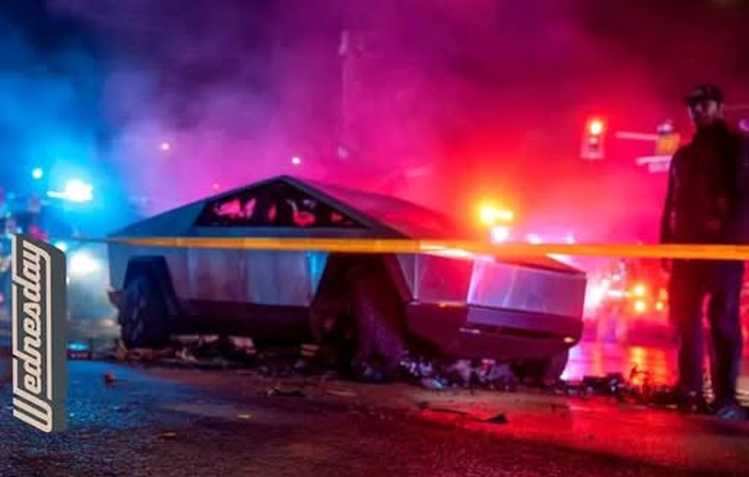
The issue is not confined to one model. In a November 2024 crash in Piedmont, California, three college students died after a Tesla Cybertruck caught fire and its electronic doors would not open. Bystanders and responders smashed windows to reach victims, and families later filed wrongful-death lawsuits alleging the design trapped occupants inside. Other cases describe parents breaking glass to free children or lawsuits claiming entire groups perished after electronic systems shut down during crashes.
Regulators have taken notice. The National Highway Traffic Safety Administration has opened a formal investigation into Tesla door handles, with an initial focus on the Model Y, after receiving complaints related to low-voltage failures. While NHTSA acknowledges that manual releases exist, investigators have flagged their placement and usability as potential hazards, especially for children or untrained passengers.
Safety advocates argue that the debate runs deeper than any one automaker. Any door system that relies on electricity or hides its mechanical backup creates risk during crashes, where power loss is common. From that view, sleek design choices should never override clear, intuitive escape paths when seconds matter.
Tesla has said some vehicles automatically unlock doors after a collision and has pointed to safety documentation describing those features. The company has not specified how consistently those systems work across its fleet. Executives have told Bloomberg that future designs aim to blend electronic convenience with mechanical simplicity so that doors can open even without power.
The stakes extend beyond Tesla. As cars become increasingly electrified and software-driven, regulators and consumers face a fundamental question: Should futuristic styling ever come at the expense of post-crash survivability? Advocates want standards that guarantee doors open without electricity and without searching. Lawmakers are already weighing whether that principle should be included in the next wave of vehicle safety rules, as EV adoption accelerates and design experiments move from novelty to the mainstream.